
Pharmaceutical Cold Chain Compliance: How Wrapped Dry Ice Bricks Protect Vaccines and Bio-Samples
If a tub of ice cream gets a little soft on its way to the grocery store, someone eats melted ice cream. But if a tray of mRNA vaccines, cell therapies, or biopsy samples warms up by just a few degrees for an hour, a clinical trial is ruined—and a shipment worth tens of thousands of dollars goes straight into the trash.
Medical cold chain shipping has zero room for error. Active, plug-in mobile freezers are heavy and can break down midway through a flight. Gel packs stop cooling around 0°C.
That is why the entire medical logistics world relies on dry ice for pharmaceutical transport. At -78.5°C, dry ice is nature’s ultimate, plug-free super-freezer.
However, if you try walking into a hospital lab or a pharmaceutical warehouse with a bucket of loose dry ice pellets, their receiving dock will reject you on the spot. Here is the practical reason why biotech shipping runs exclusively on clean, tightly pressed, and individually wrapped dry ice bricks.
The Airport Tarmac Test: Pellets vs. Bricks at -70°C
Advanced biologic drugs do not just need to stay “frozen”—they need ultra-low temperature shipping below -70°C to lock their delicate molecules in suspended animation.
Loose pellets look convenient, but they behave terribly inside a shipping cooler:
- The Air Pocket Problem: Think of loose pellets like crushed ice in a soda. All that empty space between the pellets acts like open windows for warm air. Heat rushes in, the pellets vanish within 48 hours, and your shipment arrives warm.
- The Dense Brick Advantage: When you take that same mass of dry ice and press it under hydraulic force into a rock-hard brick (1450–1550 kg/m3), you eliminate all the trapped air. With less surface area exposed to heat, the block releases cold slowly and evenly. It easily survives a 5-day journey—even if the box sits on a blazing 40°C airport tarmac during a customs delay.
- The Tetris Fit: High-end medical coolers are expensive boxes lined with vacuum insulation panels. Flat dry ice blocks fit cleanly along the walls and floor like bricks, wrapping the fragile vials in a solid cold blanket with zero wasted space and no tumbling during turbulence.
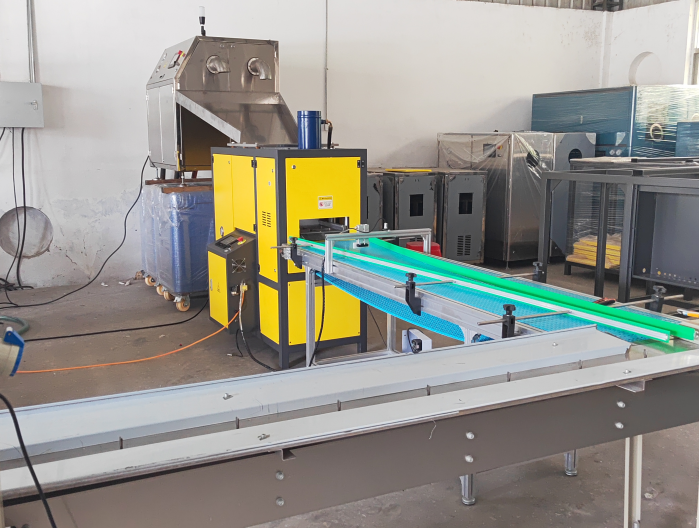
To produce these exact blocks, commercial suppliers use an integrated dry ice briquette and packaging line, shaping the snow into tight bricks that fit standard cooler blueprints right off the line.
Dirty Ice Ruins Clean Labs: The Case for Wrapped Slices
Hospital and lab receiving areas are clean rooms. When cold boxes arrive, technicians inspect every corner. Unwrapped dry ice fails these audits for reasons most people never think about:
- The Melting Frost Nightmare: Bare dry ice is so cold that it pulls moisture out of the air like a magnet, creating a thick layer of frost. When technicians open the box in a warm room, that frost melts into actual water puddles, soaking the paper boxes inside and turning barcode labels into soggy mush. If a lab cannot scan the barcode, the shipment is discarded.
- Dust and Grease: Unwrapped dry ice is shoveled with metal scoops, handled with dirty work gloves, and collects dust in open warehouse air. Nobody wants dirty ice sitting next to sterile medical vials.
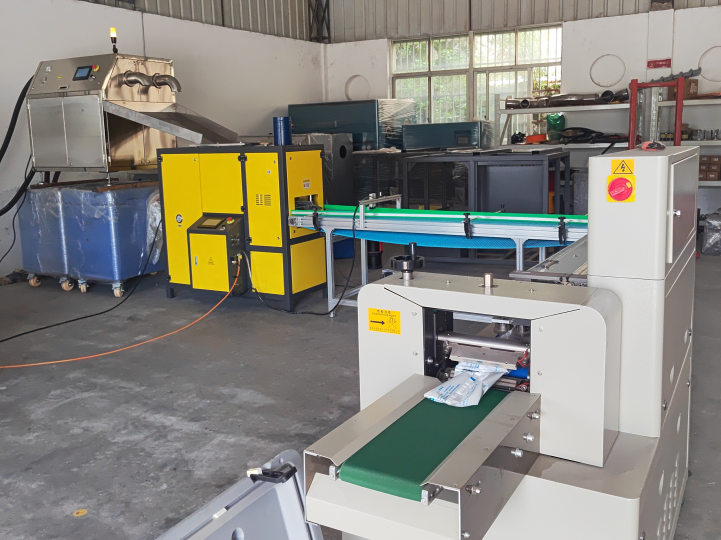
- The Solution: A Hygienic Dry Ice Block: By running newly pressed blocks directly through an automated flow-wrapper, the dry ice gets sealed in tough, protective film without a human hand touching it. The plastic skin stops frost from forming, keeps water puddles away from sample labels, and lets lab workers unpack cold drawers safely without risking instant freeze burns on their skin.
Top-tier suppliers also build their machines out of food-grade 304 stainless steel, ensuring that the dry ice snow never picks up rust spots, metal shavings, or hydraulic oil along the way.
The Real Money in Dry Ice
Selling bulk dry ice pellets to blast cleaners is a low-margin, race-to-the-bottom business.
Supplying medical networks with standardized, pre-wrapped bricks of dry ice for pharmaceutical transport is entirely different. Hospitals, contract research organizations (CROs), and biotech distributors do not care about saving pennies per kilo—they care about certified cleanliness, exact block dimensions, and reliable cold that protects multi-million-dollar medicine.
If your plant can crank out clean, wrapped, ultra-dense dry ice bricks on demand, you are no longer just selling frozen gas. You are selling insurance for life-saving medicine—and that is where the real profit lives.