
Understanding the Two-Stage Dry Ice Briquetting Process: Why Pellets Come First
When plant managers look at dry ice equipment, a common question always comes up:
“Why use two machines? Why not just inject liquid CO2 directly into a machine and press it into a block in one step?”
A single-stage liquid press sounds simpler on paper. But in commercial production, injecting liquid directly into a large block chamber creates major headaches: uneven density, fragile corners, and slow cycle times.
That is why commercial dry ice plants rely on a two-stage approach: liquid CO2 → pellets → dense blocks.
Here is the engineering reality behind the two-stage dry ice briquetting process and why it produces a far superior commercial product.
How the Two-Stage Dry Ice Briquetting Process Works
Instead of trying to freeze and shape liquid carbon dioxide inside a single massive chamber, the two-stage system splits the physical workload between two specialized machines:
- Stage 1 (Flash Expansion & Extrusion): Pressurized liquid CO2 sprays into the pelletizer chamber, turning into dry ice snow. Heavy-duty mechanical pistons immediately push this snow through a hardened extrusion plate, producing dense, uniform 3mm or 9mm pellets.
- Stage 2 (Compacting into Blocks): These fresh pellets drop directly into a CO2 hydraulic press. The press exerts sustained hydraulic tonnage, crushing the solid pellets so their crystal structures interlock tightly into a solid brick.
This method of dry ice pellet briquetting separates gas venting from final block compaction, giving you total control over both speed and density.
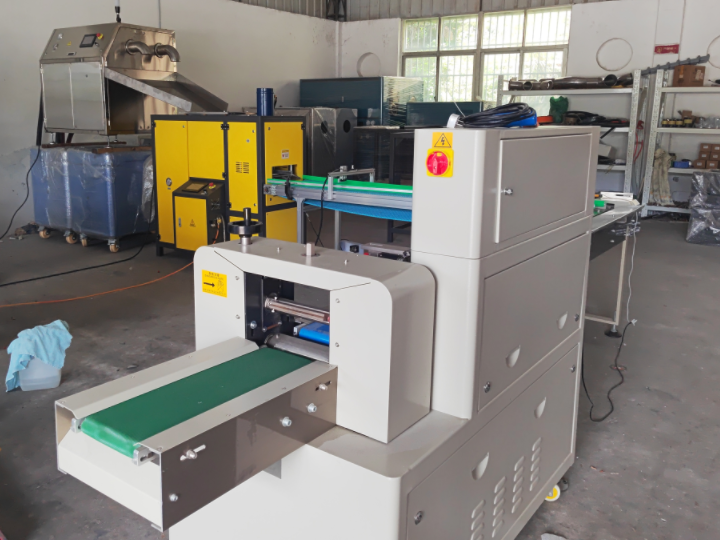
Why Single-Stage Liquid Pressing Falls Short
Traditional single-stage dry ice block machines inject liquid CO2 straight into a block-sized mold. While it works, it creates three persistent operating flaws:
- Trapped Gas Pockets: When liquid flashes to snow in a wide mold, high-pressure gas gets trapped under the falling snow. When the press comes down, these gas bubbles cannot escape in time, leaving invisible voids inside the block. The resulting ice snaps easily during shipping.
- Slow Cycle Times: A single-stage machine has to inject liquid, wait for the gas to vent, compress the snow, and eject the block—all inside the exact same chamber. The machine spends half its time just waiting for gas to bleed off.
- Crumbly Edges: Because the snow forms unevenly around the mold walls, the edges of the block stay soft. When you take the block out, the corners crumble into loose dust, reducing sellable weight.
The Payoff: Higher Density and Extended Shelf Life
By using pre-compacted pellets as your starting material, the second-stage hydraulic press starts with solid material rather than loose snow. This delivers distinct physical advantages:
- Maximum Density (1450–1550 kg/m3): Pre-compacted pellets crush together under hydraulic force with zero air pockets. You get a true high density dry ice block that feels like solid polished stone.
- Half the Melting Speed: Because the internal structure is tightly packed, warm ambient air cannot penetrate the block. A two-stage block lasts nearly twice as long in a shipping container compared to a block pressed directly from loose snow.
- True Production Flexibility: Owning an integrated dry ice briquette and packaging line gives you two businesses in one. When cleaning contractors need blasting media, you sell 3mm pellets straight from Stage 1. When cold chain clients need long-lasting coolers, you route the pellets to Stage 2 and press standard bricks.
Smarter Engineering Means Higher Margins
In commercial manufacturing, extra steps are only worth it if they save money or create a better product.
Mastering the two-stage dry ice briquetting process eliminates soft, crumbly blocks, speeds up cycle times, and gives you the flexibility to sell both pellets and blocks from the exact same raw material supply. It is the reliable standard for operators who care about product quality and real plant efficiency.