
Why Your Dry Ice Machine Makes “Snow” Instead of Solid Pellets: Dry Ice Machine Low Density Troubleshooting
Few issues halt a production schedule faster than an extruder spitting out soft, powdery snow instead of rock-hard, high-density dry ice pellets.
When pellets crumble under light thumb pressure or disintegrate into dust inside transfer totes, operators instinctively suspect mechanical failures: worn piston seals, weak hydraulic pressure, or worn extrusion dies. Maintenance teams spend hours disassembling the press only to find the mechanical parts in perfect working order.
In practical field diagnostics, mechanical faults account for less than 20% of soft-pellet complaints.
A successful dry ice machine low density troubleshooting procedure begins upstream at the liquid carbon dioxide supply. If incoming liquid CO2 drops below critical thermodynamic thresholds before reaching the injection nozzle, the machine cannot compact dense dry ice, regardless of hydraulic tonnage.
The Physics of Fluffy Pellets: How Flash Gas Starves the Compression Chamber
To produce dense pellets (1450–1550 kg/m3), an extruder relies on a full hydraulic charge of solid snow. That snow forms when pressurized liquid carbon dioxide flashes through an expansion nozzle into an atmospheric chamber.
[Pure Liquid CO2 (1.8 MPa)] ➔ Injection Orifice ➔ Rapid Depressurization ➔ Dense Snow Matrix
[Liquid/Gas Mixture (1.1 MPa)] ➔ Injection Orifice ➔ Vapor Bypass ➔ Weak, Porous Snow
When diagnosing liquid CO2 supply issues, consider how the machine draws mass:
- Mass Delivery by Phase: Liquid carbon dioxide at -18°C has a density around 0.93 kg/L. Gaseous carbon dioxide at the same temperature and pressure has a density around 0.06 kg/L. Liquid delivers over fifteen times more mass per cubic centimeter than gas.
- The “Short-Charge” Effect: Extrusion chambers inject based on time (e.g., a 2.5-second injection stroke). If feed lines deliver solid, bubble-free liquid, the chamber fills with dense snow. If premature vaporization occurs, the chamber fills primarily with low-density gas and loose snow dust.
- Piston Stroke Bottoming: When the hydraulic piston advances, it meets minimal physical resistance because there is insufficient solid snow mass in the chamber. The piston reaches the end of its stroke without generating compaction tonnage, pushing out loose, crumbly “chalk” rather than dense pellets.
Tank Pressure: The Root Cause of Dry Ice Machine Pressure Drop
The most common culprit behind poor pellet density is an operating pressure deficit in your supply dewar or microbulk tank.
Liquid CO2 exists in an equilibrium state along its saturation curve. At typical storage temperatures (-20°C to -15°C), the tank requires an internal head pressure of 1.6 to 2.2 MPa (16 to 22 bar).
Normal Tank State: 1.8 MPa Head Pressure ➔ Liquid Remains Solidly Subcooled in Transfer Line
Under-Pressured Tank: 1.2 MPa Head Pressure ➔ Heat Leak Causes Immediate Boiling in Pipe ➔ Vapor Lock
When performing dry ice machine low density troubleshooting, check the pressure gauge on your supply vessel:
- The Sub1.4 MPa Danger Zone: If tank pressure slips below 1.4 MPa (14 bar), the saturation point destabilizes. Ambient heat penetrating the flexible transfer hose causes the liquid to boil inside the pipe before it reaches the machine.
- Vapor Lock in the Manifold: This boiling creates vapor pockets—a condition known as cavitation or vapor lock. The injection valve opens, but instead of a solid jet of liquid, it discharges spitting bursts of warm gas and thin mist.
- Why Tanks Lose Pressure: Rapid production draws liquid faster than ambient heat can naturally warm the remaining volume, causing internal tank pressure to collapse.
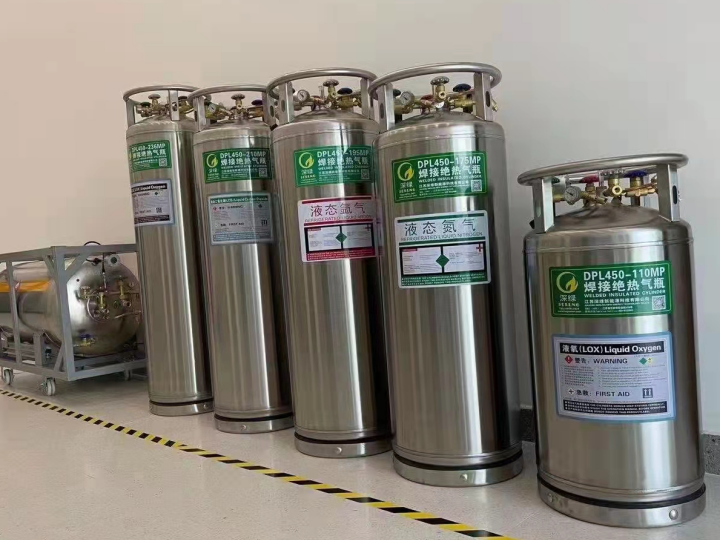
Connecting your line to an engineered vacuum-insulated liquid CO2 storage tank equipped with an automatic pressure-building vaporizer loop prevents this pressure drop, holding output pressure steady even during multi-hour continuous runs.
Step-by-Step Field Checklist for Dry Ice Machine Troubleshooting
Before turning a single wrench on your hydraulic unit, follow this systematic dry ice machine troubleshooting sequence to verify your gas supply integrity:
1. Inspect the Transfer Line for “Frost Spotting”
Walk the length of the stainless steel braided transfer hose. In normal operation, the entire hose should develop an even, light layer of frost. If you see specific, heavy ice collars or bare warm spots followed by ice, the pipe has a flow restriction or internal diameter reduction that is causing the liquid to flash prematurely inside the hose.
2. Verify Liquid Valve Engagement
Ensure the transfer hose connects strictly to the LIQUID withdrawal valve (typically color-coded blue). If an operator mistakenly connects to the gas withdrawal valve, the machine draws head vapor instead of liquid, producing zero pellet density.
3. Check the Static vs. Dynamic Pressure Drop
Observe the tank pressure gauge while the machine is idle, then watch it during a full injection stroke. A sudden dry ice machine pressure drop of more than 0.3 MPa (3 bar) during injection indicates that your transfer line inner diameter is too small (e.g., 1/4″ instead of 1/2″), or that an upstream filter screen is clogged with frozen pipe scale.
4. Engage the Pressure-Building Circuit
If your dewar pressure sits below 1.6 MPa, open the pressure-building valve on the tank base. Allow the external vaporization loop to boil a small amount of liquid and route it to the top vapor space until vessel pressure stabilizes between 1.8 and 2.0 MPa before restarting production.
Correct Pressure Delivers Solid Profits
In commercial dry ice manufacturing, mechanical tonnage only compacts what the fluid circuit delivers. If your machine is producing loose snow, step away from the hydraulic valves and examine your supply pressure, transfer line temperature, and phase stability.
Maintaining steady liquid delivery above 1.6 MPa eliminates vapor pockets, fills the compression chamber with dense snow, and ensures every stroke extrudes hard, long-lasting pellets that satisfy your customers.