
How Long Does Liquid CO2 Last in a Tank Without Evaporating?
For plant managers and workshop owners, few things are as frustrating as walking into the facility on a Monday morning and hearing the hiss of a relief valve blowing off pressure. Liquid carbon dioxide (LCO2) is an expensive utility. Watching paid-for raw material vent into the atmosphere feels like watching cash evaporate.
When planning production breaks or holiday shutdowns, operators always ask: how long does liquid CO2 last in a tank before it starts venting, and how much product will actually be lost?
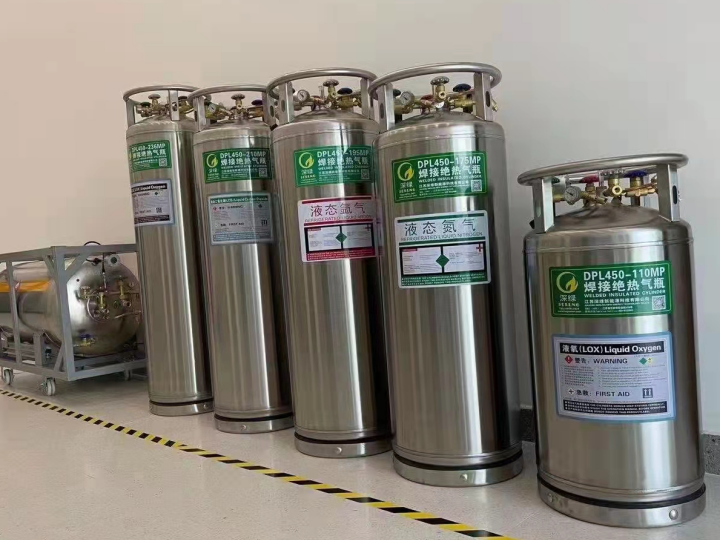
Under standard factory conditions, a certified dewar or microbulk vessel holds liquid CO2 for 5 to 8 days before the primary safety valve opens to vent pressure. Understanding the thermal principles behind this window allows you to manage inventory and eliminate unnecessary loss.
Thermal Physics: Why Liquid CO2 Does Not “Boil Away” Like Water
To understand storage lifespan, you must distinguish between an open container and a sealed pressure vessel.
In an open pot, boiling liquid turns to vapor and escapes into the room. In a sealed cryogenic cylinder, that vapor has nowhere to go. As heat slowly breaches the outer jacket, a small amount of liquid flashes into gas, increasing the vapor density in the top head space.
Heat Ingress ➔ Liquid Warming ➔ Surface Vaporization ➔ Vapor Density Rises ➔ Tank Pressure Climbs
This dynamic causes internal tank pressure to rise along the carbon dioxide saturation curve:
- Initial Cold State: Freshly filled LCO2 typically sits at roughly -20°C with an equilibrium saturation pressure around 1.4 to 1.6 MPa (14 to 16 bar).
- Controlled Pressure Rise: The vacuum insulation holds the daily thermal leak to a low static evaporation rate (typically under 1.2% to 1.8% of net capacity per 24-hour cycle). This heat leak drives internal pressure upward at a predictable rate of 0.08 to 0.15 MPa per day.
- The Venting Threshold: The vessel does not release gas until internal pressure reaches the safety valve crack setting (typically 2.0 to 2.4 MPa on medium-pressure models).
Therefore, answering how long does liquid CO2 last in a tank depends directly on the pressure gap between your starting pressure and your safety relief setting.
Real-World Holding Times Across Tank Capacities
The total duration a vessel holds liquid without releasing gas to the atmosphere is defined as the CO2 dewar holding time.
Larger tanks perform significantly better than smaller portable cylinders. As vessel volume increases, the ratio of outer surface area to liquid volume drops, meaning heat breaches large tanks much slower.
The table below outlines typical non-venting durations and post-venting loss rates across standard commercial vessel sizes:
| Tank Capacity (Model) | Net Liquid Mass | Starting Pressure | Relief Valve Setting | Non-Venting Holding Time | Post-Relief Venting Loss |
|---|---|---|---|---|---|
| 175 L (Portable) | ~140 kg | 1.4 MPa | 2.2 MPa | 4 to 6 Days | ~2.0 to 2.5 kg / day |
| 195 L (Portable) | ~155 kg | 1.4 MPa | 2.2 MPa | 5 to 7 Days | ~2.0 to 2.8 kg / day |
| 500 L (Skid) | ~400 kg | 1.4 MPa | 2.2 MPa | 7 to 9 Days | ~4.5 to 5.5 kg / day |
| 1000 L (Microbulk) | ~820 kg | 1.4 MPa | 2.45 MPa | 9 to 12 Days | ~7.0 to 9.0 kg / day |
Note: Data assumes ambient shop temperatures of 20°C to 22°C with vessels filled to standard 85% liquid capacity.
Once the relief valve lifts, it does not empty the tank. The valve simply cracks open, bleeds off a small volume of vapor to drop internal pressure below the set point, and reseats firmly. The liquid inside remains usable cold inventory for weeks, losing only a small fraction of its mass daily.
Workshop Best Practices to Prevent Venting Waste
If your plant plans to shut down for an extended holiday, take these practical steps to extend how long does liquid CO2 last in a storage tank and avoid venting losses:
- Lower Pressure Before the Weekend: On Friday afternoon, vent gas head space down to 1.3 to 1.4 MPa by running downstream equipment. Starting the weekend with low pressure maximizes your safety buffer before the valve cracks.
- Store Tanks in Cool, Ventilated Areas: Keep vessels out of direct sunlight and away from hot compressors. A drop of 10°C in ambient air temperature can add two full days to your holding window.
- Inspect the Outer Shell: If you notice moisture condensation or cold frost rings forming on the outer stainless jacket, your vacuum insulation has failed. The tank is warming rapidly and requires immediate service.
Managing these operating parameters protects your raw material investment, ensuring your liquid carbon dioxide remains cold, dense, and ready for 干冰生产 whenever your shift starts.