건조 아이스에 손을 대도 되나요? 초보자를 위한 궁극적인 안전 가이드
Whether you are packing a medical cooler, cleaning an engine bay, or setting up a catering event, the most common question for first-time users is: Can you touch dry ice with your bare hands?
The direct answer is no. Touching dry ice without proper protection is dangerous and can lead to severe injuries. Here is the exact science behind what happens when skin meets extreme cold, and how professionals handle this material safely.
-78.5°C (-109.3°F)의 물리학:
Dry ice is solid carbon dioxide. Its surface temperature remains constant at an extreme -78.5°C (-109.3°F).
이 온도에서는 이 물질이 불이 일으키는 열화상과 같은 열 화상을 일으키지 않으며, 대신 빠른 동상화를 유발합니다. 맨손이 마른 얼음과 오랜 시간 접촉하면, 극한의 추위가 신체의 열을 빠르게 빼앗아 갑니다. 피부 세포 내부의 수분이 얼음 결정으로 변하여 세포벽이 파열되고 영구적인 조직 손상이 발생합니다. 그러나 물리적 감각은 심한 화상과 매우 유사하게 느껴집니다.
1초 동안 만지면 어떻게 되나요?
Many people wonder why they accidentally brushed against a dry ice pellet and did not instantly lose a finger. This is due to a physical phenomenon known as the Leidenfrost Effect.
마른 얼음이 따뜻한 표면(예: 손)에 닿으면 즉시 승화되어 얼음과 피부 사이에 미세한 이산화탄소 가스 층이 형성됩니다. 이 가스는 잠시 동안 일시적인 절연막 역할을 합니다.
펠릿을 빠르게 떨어뜨리거나 스치듯 지나가면 날카로운 통증만 느낄 수 있습니다. 그러나 마른 얼음 블록을 잡거나 손바닥에 펠릿을 2초 이상 잡고 있으면, 냉기가 이 가스막을 침투합니다. 피부가 얼어 하얗거나 회색빛 노랗게 변하며, 곧 물집이 생깁니다.
취급 시 표준 안전 규칙:
작업장 내 부상을 방지하기 위해 산업 시설은 엄격한 마른 얼음 취급 프로토콜을 준수합니다:
- 항상 PPE 착용: 무거운 절연 장갑 없이 마른 얼음을 다루지 마십시오.
- 집게 또는 스푼 사용: 적은 양의 얼음을 옮길 때는 금속 또는 플라스틱 스푼을 사용하십시오.
- 밀봉하지 마십시오: 마른 얼음을 완전히 밀폐된 용기(예: 유리병)에 넣지 마십시오. 승화하는 가스가 극심한 압력을 형성하여 용기가 폭발할 수 있습니다.
- 환기 필수: 마른 얼음이 CO2 가스로 변하기 때문에, 환기되지 않는 작은 방에서 작업하면 산소를 대체하여 질식을 유발할 수 있습니다.
자동화 장비와의 접촉 최소화:
대량의 마른 얼음을 사용하는 기업의 경우, 가장 안전한 방법은 수작업 취급을 완전히 최소화하는 것입니다.
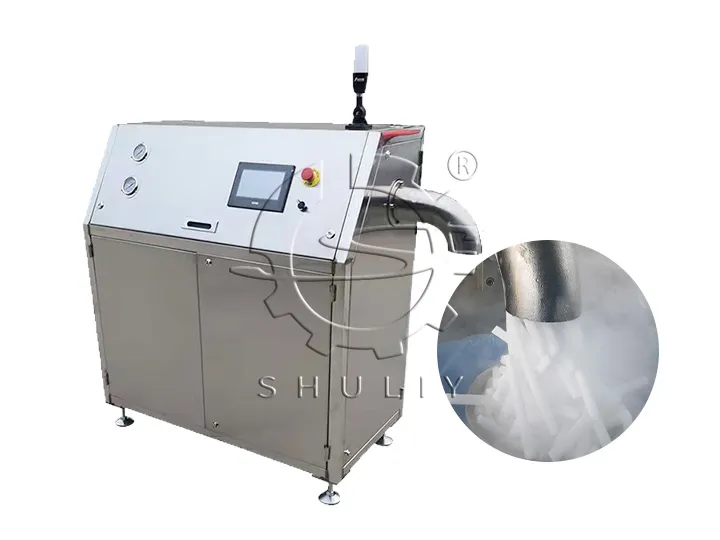
Facilities using an on-site 드라이 아이스 펠릿 제조 기계 significantly reduce operator risk. Instead of workers manually breaking apart heavy, dangerous dry ice blocks with hammers, the machine automatically extrudes high-density pellets directly into storage coolers or the hoppers of blasting equipment. This automated workflow keeps hands away from the extreme cold, speeding up production while maintaining a strict safety environment.