Dry Ice First Aid: What to Do in Case of Frostbite or CO2 Asphyxiation?
Working with dry ice involves two distinct physical hazards: extreme cryogenic temperatures (-78.5°C / -109.3°F) and the rapid expansion of carbon dioxide gas. Understanding the precise medical response to these hazards is critical for any industrial or commercial team.
Here is the factual first aid protocol for dry ice injuries.
Treating Dry Ice Frostbite (Cryogenic Burns)
A “dry ice burn” is actually severe frostbite. When bare skin touches dry ice for more than a second or two, the water inside the skin cells freezes into microscopic ice crystals, expanding and rupturing the cell walls.
If an operator suffers dry ice frostbite, follow these steps immediately:
- Remove the Source Safely: Ensure the dry ice is removed from the person’s clothing or skin using heavy gloves or tongs.
- Do Not Rub the Skin: The affected skin will appear white or grayish-yellow. Never rub or massage the area. Rubbing forces the internal ice crystals to tear surrounding healthy tissue.
- Lukewarm Water Soak: Submerge the affected area in lukewarm water (ideally between 37°C and 40°C / 98°F to 104°F) for 15 to 30 minutes. Do not use hot water, as the numb skin cannot accurately gauge heat and may suffer thermal burns.
- Seek Medical Attention: Once the skin thaws, it will become red, swollen, and likely blister. Treat it as a severe burn and consult a doctor immediately.
Managing CO2 Asphyxiation
Dry ice sublimates from a solid into a gas. Because CO2 gas is 1.5 times heavier than standard air, it sinks and pools in low-lying areas or unventilated rooms, silently displacing oxygen.
Early symptoms of CO2 toxicity include headache, dizziness, rapid breathing, and a sudden loss of motor coordination.
- Evacuate Immediately: If anyone feels lightheaded while working with dry ice, immediately move them to an outdoor area with fresh air.
- Do Not Enter Blindly: If a worker collapses in a walk-in freezer or confined storage room containing dry ice, do not rush in without a self-contained breathing apparatus. Open all doors and activate industrial exhaust fans to clear the gas first.
Preventing Accidents Through Automation
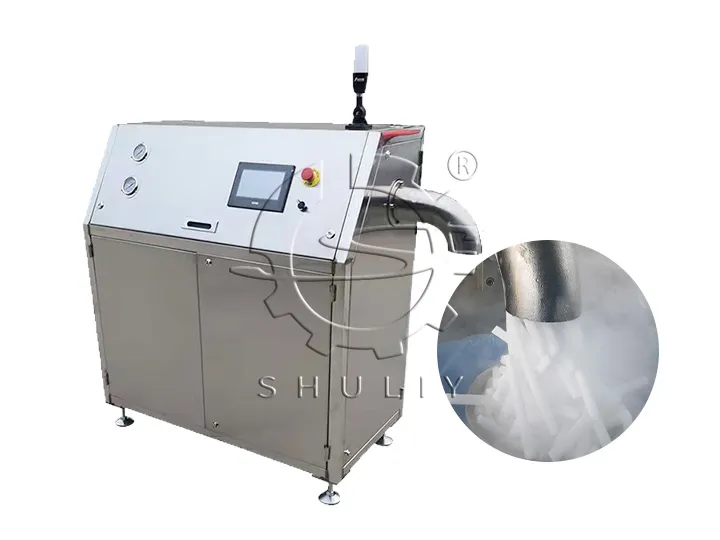
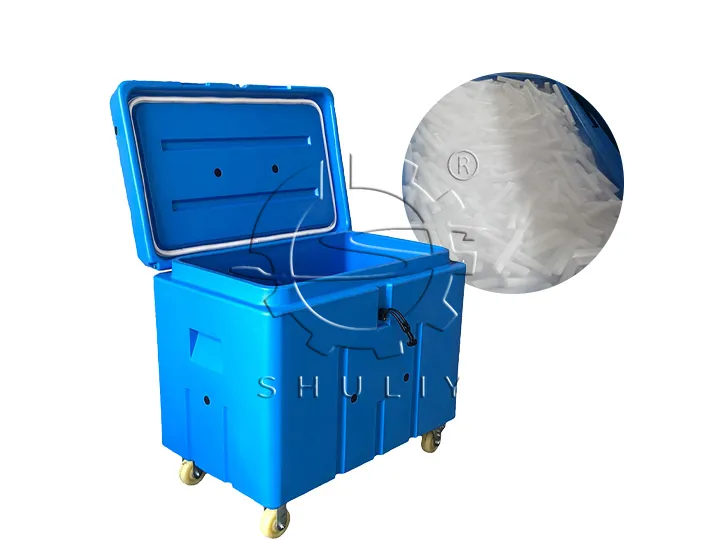
The most effective safety protocol is minimizing human contact with the material. Businesses that upgrade to an automated dry ice pellet machine eliminate the need for workers to manually break apart dangerous dry ice blocks. The machine extrudes pellets directly into isolated containers, ensuring a safer, hands-free production cycle.
Dry Ice Pellet Making Machine
With a minimum output of 40kg/h and a maximum of 500kg/h, Shuliy dry ice pellet making machine has improved many global customers start and expance their dry ice production. We…