Airplanes serve hundreds of fresh meals on every flight, but the meal carts do not have electric refrigerators. Compressors add too much weight, drain engine power, and blow hot exhaust air directly into the cabin.
Instead, international carriers rely on dry ice for airline catering to keep in-flight meals chilled.
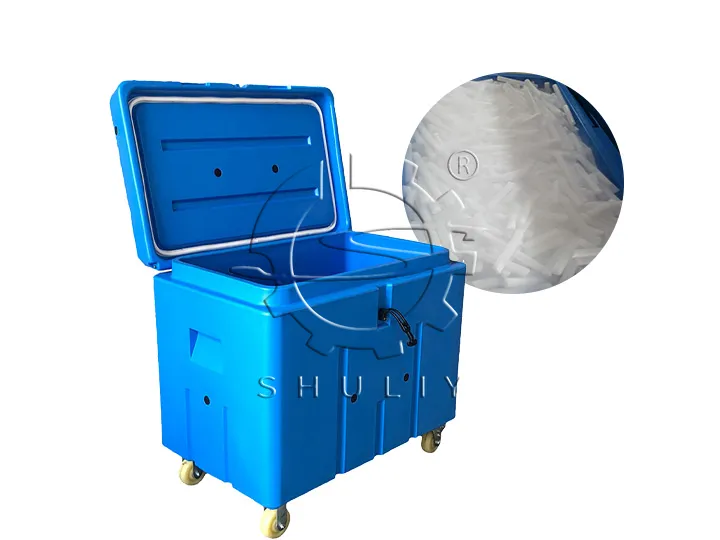
However, flight kitchens never use loose dry ice pellets . They buy solid, wrapped blocks pressed to a high density. Here is why airlines strictly demand this exact shape and weight.
Cart Drawers and Clean Airflow: Why Pellets Fail
Airline food carts stay cold through passive airflow. At the very top of each cart sits a shallow dry ice drawer with vents in the bottom. Because cold carbon dioxide gas is heavier than air, it sinks, cooling every meal tray from top to bottom.
This setup makes airline food cooling simple and reliable, but it requires a very specific fit:
- Fixed Drawer Size: The top drawer is built for flat blocks, usually 125×106 mm125 \times 106 \text{ mm}125×106 mm and about 20 mm20\text{ mm}20 mm thick.
- Pellets Make a Mess: Loose pellets roll around during takeoff, slide into cart wheel tracks, and drop through the vents directly onto passenger food trays.
- Even Air Circulation: Flat blocks leave clear channels along the cart walls so cold air moves freely. Piled pellets block airflow, leaving meals at the bottom warm while freezing the meals at the top.
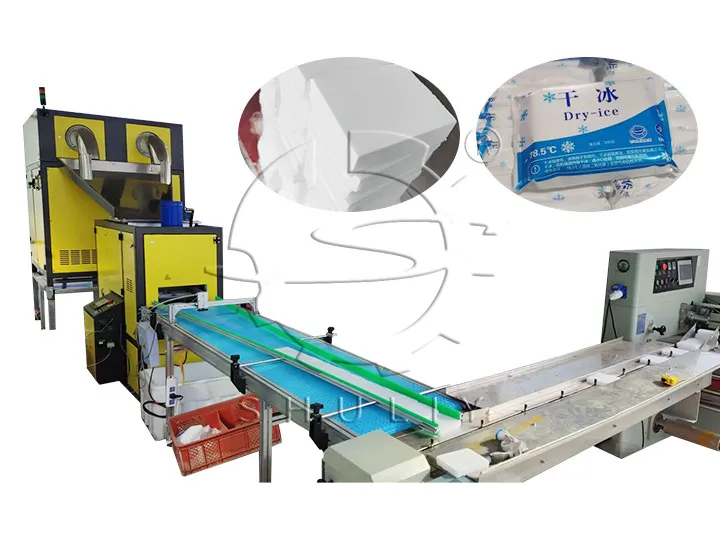
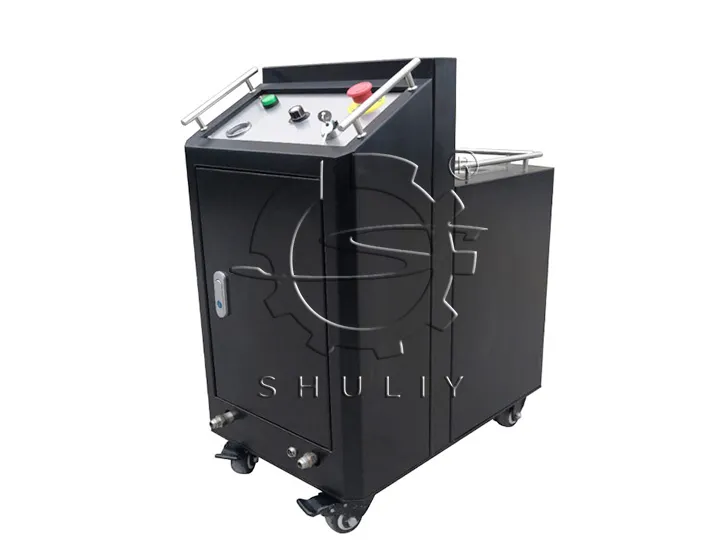
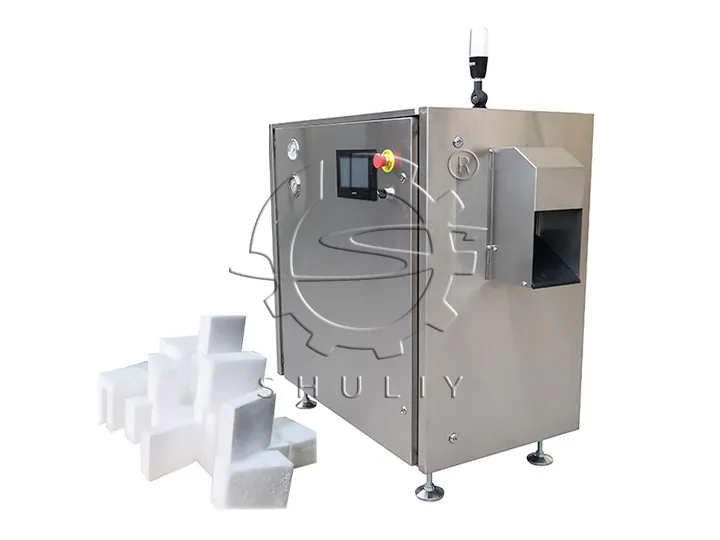
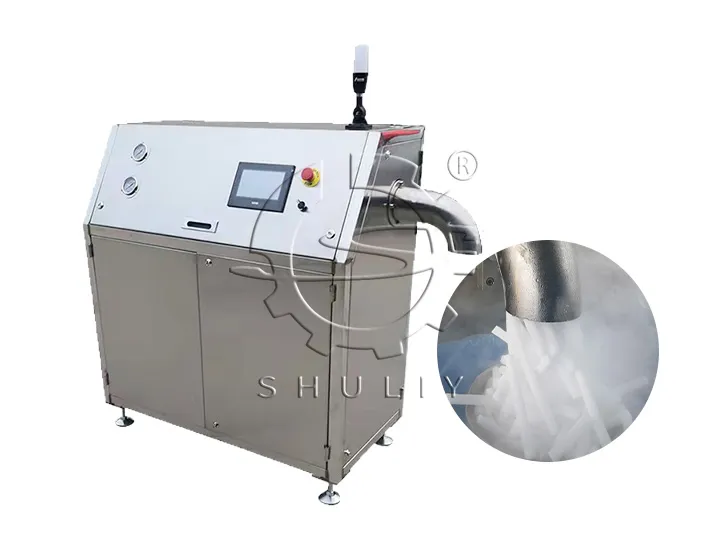
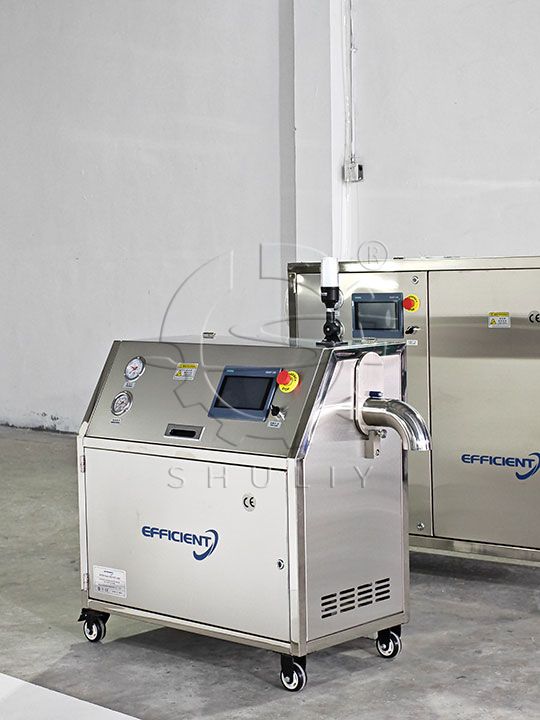
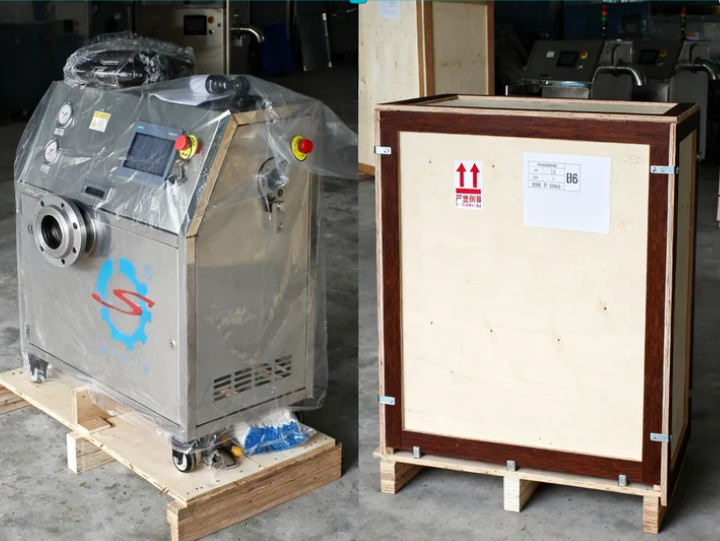
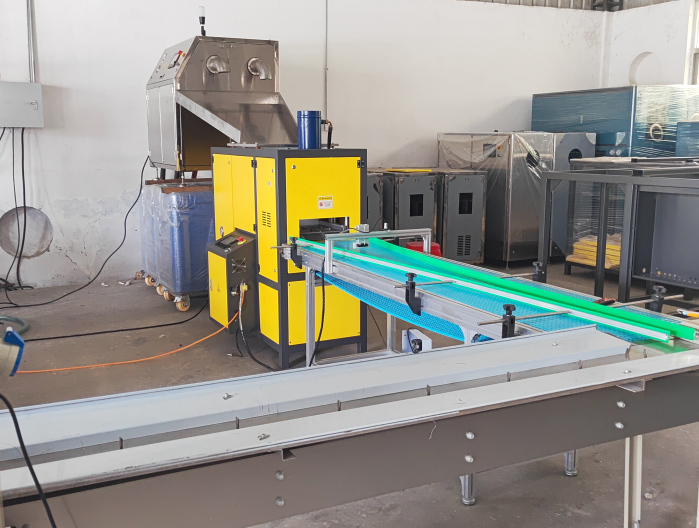
To supply flight kitchens, dry ice makers use an automated dry ice briquette and packaging line to press pellets into uniform blocks that slide directly into airline drawers without trimming.
High Density Keeps Meals Cold for the Entire Flight
Long international flights can last over 10 hours, plus extra time spent waiting on the airport runway. The cooling source must last through the entire trip.
Loose pellets have too much air between them and melt away quickly. By comparison, high-density blocks (1450 to 1550 kg/m31450\text{ to }1550 \text{ kg/m}^31450 to 1550 kg/m3) are pressed under heavy hydraulic force, squeezing out all trapped air and cutting the exposed surface area in half.
This dense structure gives aviation cold chain dry ice two vital advantages:
- Steady Cold Release: Dense blocks melt at a slow, predictable rate, keeping fresh food cold or ice cream frozen until landing.
- Cabin Air Safety: Because dense blocks melt slowly, they release gas gradually. This prevents carbon dioxide from building up too fast in the enclosed aircraft cabin, keeping passengers and flight crews safe.
Why Wrapped Dry Ice Slices Are Mandatory
Airline hygiene rules strictly ban putting bare dry ice into food carts. Caterers only accept wrapped dry ice slices for two everyday reasons:
- No Water Drips on Food: Bare dry ice is freezing cold (-78.5°C). When it touches humid air, moisture condenses on its surface. On a plane, this moisture melts and drips down, soaking cardboard meal boxes below. Wrapping each block in plastic film stops this condensation completely.
- Crew Safety: Flight attendants have to move quickly in tight galleys. Film wrapping lets them slide dry ice drawers in and out without touching bare ice and getting instant cold burns on their fingers.
Supplying Commercial Airlines
Airline catering companies like LSG Sky Chefs, Gate Gourmet, and dnata do not buy loose dry ice by the shovel. They buy clean, individually wrapped blocks with verified weights and consistent cooling performance.
Suppliers who can automatically produce dense, pre-wrapped blocks meet airline audit rules with ease, turning standard dry ice for airline catering into profitable, long-term supply contracts.